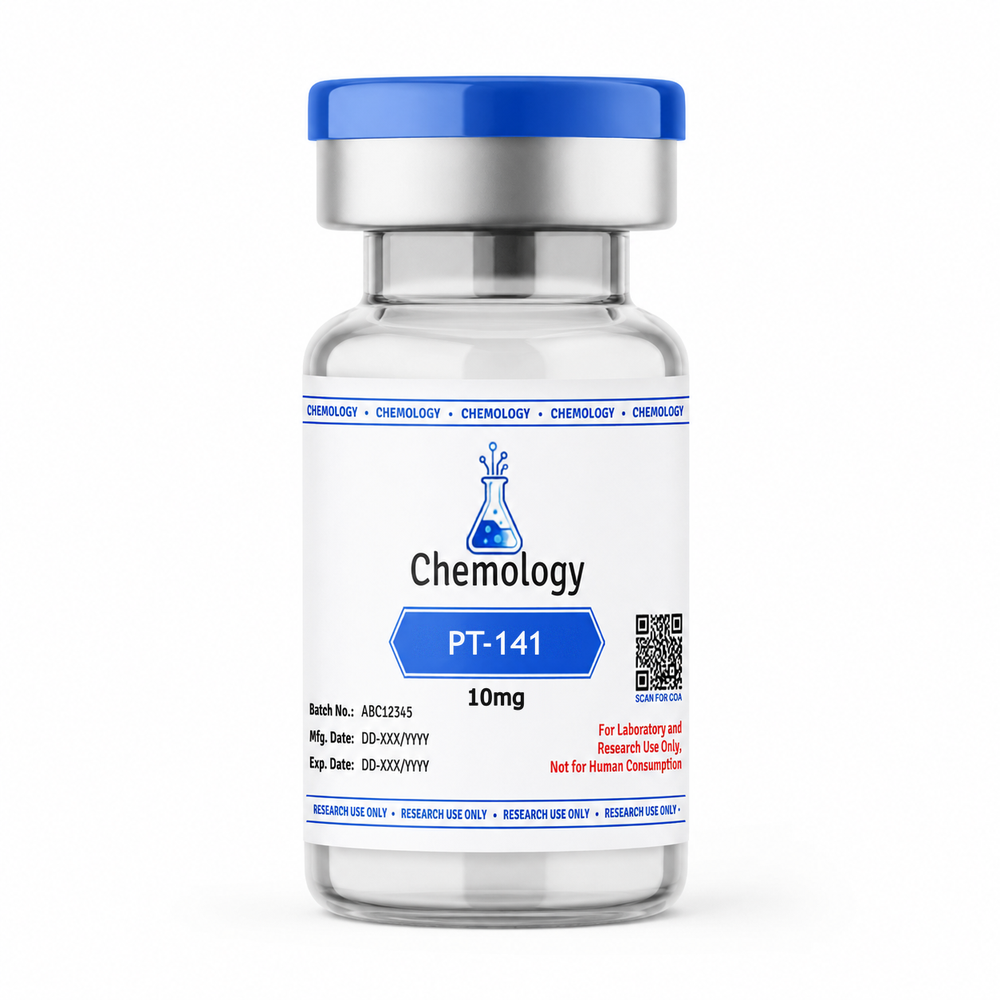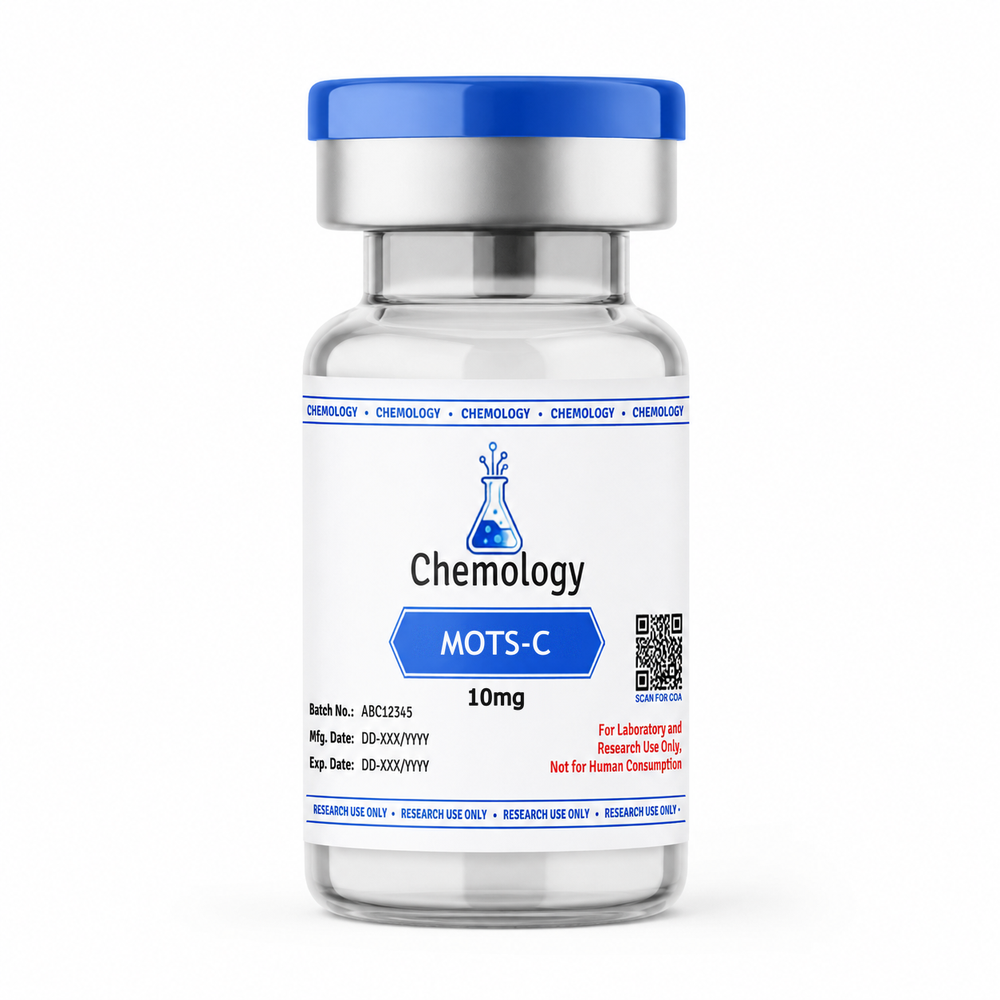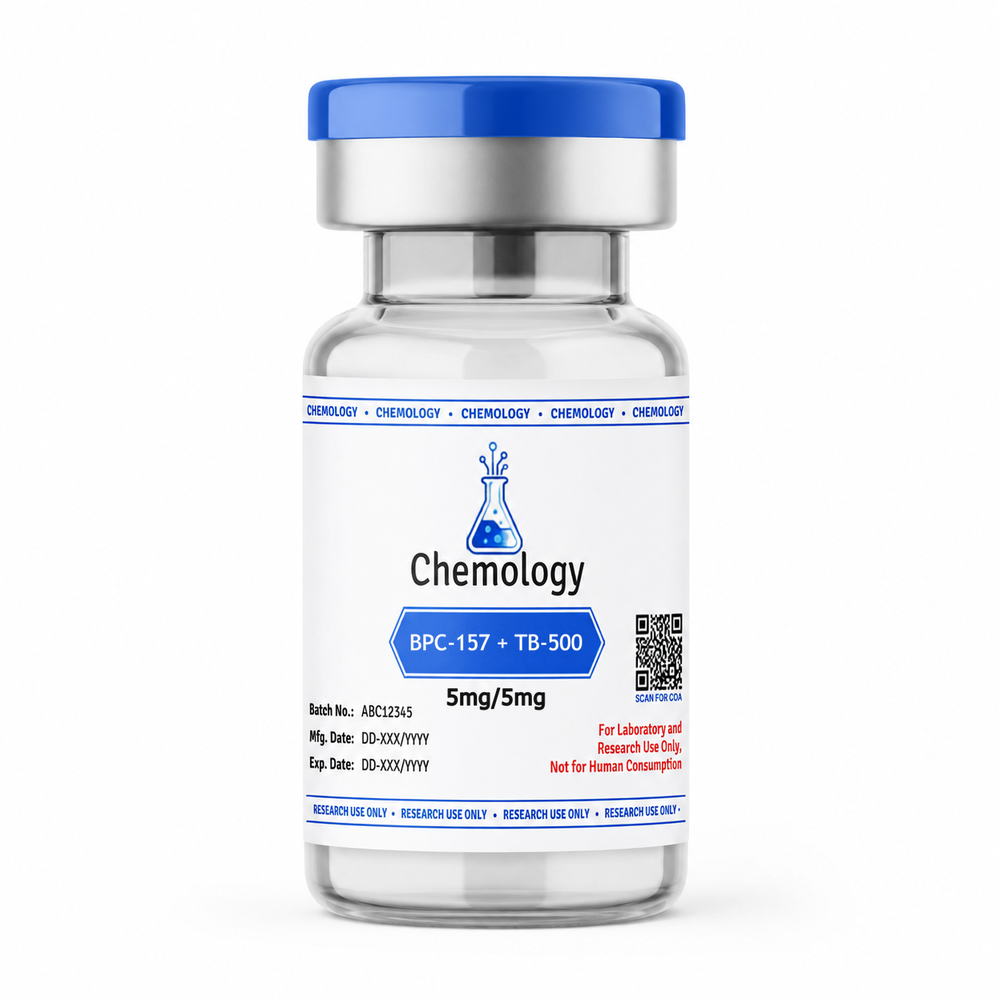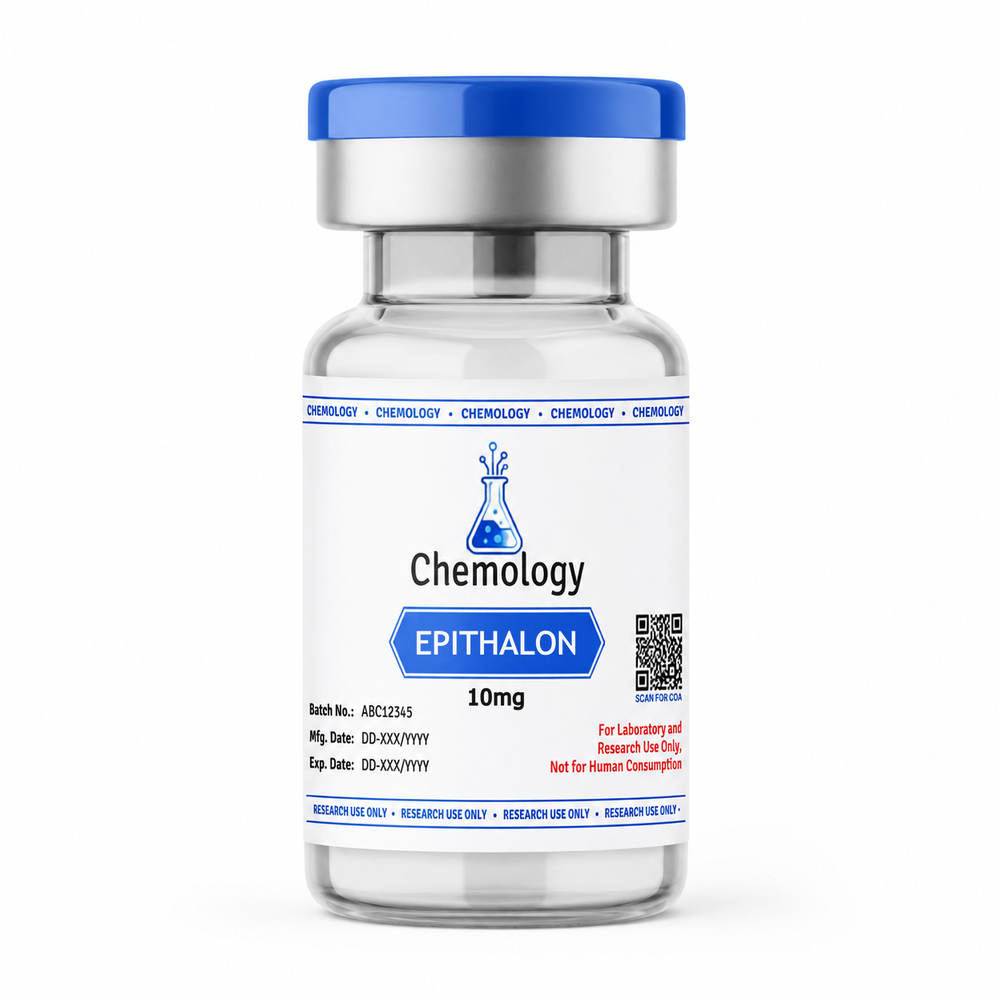
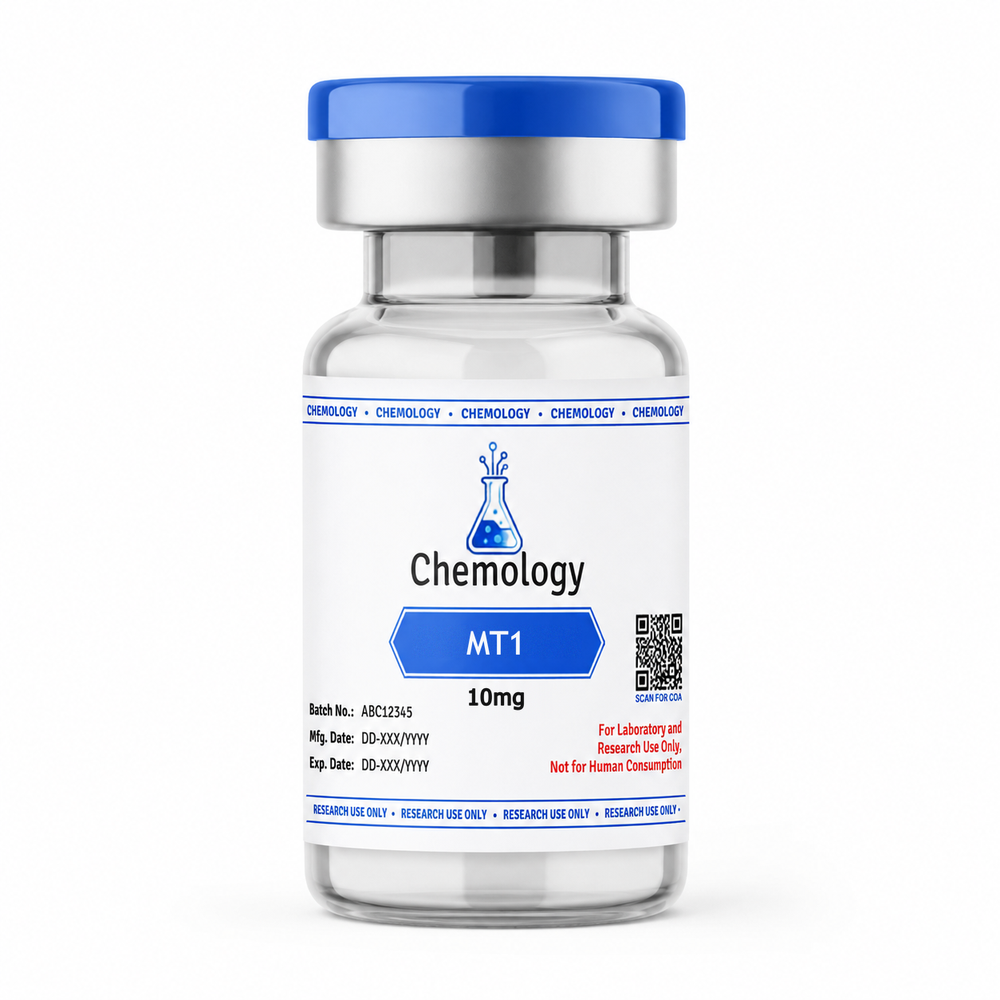
MT1 10mg
$27.99
- Research use only Not for human or veterinary use
- Certificate per lot Published against the lot number
- Independently tested RP-HPLC with LC-MS identity
- Restricted sale 18+ qualified researchers only
Certificates of analysis
Analytical testing is carried out by an independent third-party laboratory. Select a lot to view its report.
Storage and Handling
Storage and handling
The guidance below applies to lyophilized reference material supplied by Chemology. Where the certificate of analysis for a specific lot states different conditions, that certificate takes precedence over this page.
On arrival
Inspect the vial and seal before storing. Do not use material where the seal is broken, the stopper is displaced, or the contents are discolored or show visible moisture. Record the lot number printed on the label against the certificate of analysis published for that lot, so the documentation and the physical vial stay connected from the moment the box is opened.
Sealed vials
Store sealed vials at -20°C, protected from light and moisture. Lyophilized peptides are hygroscopic and will draw water from the air once the seal is broken, so vials should remain closed until the point of use. Allow a vial to reach room temperature before opening it, since opening a cold vial causes condensation to form inside and introduces moisture into the powder.
After reconstitution
Hold reconstituted material refrigerated and protected from light. Peptides in solution are less stable than in the lyophilized state, and stability in solution varies considerably between compounds. Aliquot rather than repeatedly freezing and thawing a single container, since freeze-thaw cycling is a common cause of degradation, particularly for larger sequences and for material containing free thiol or disulfide groups.
Compounds needing extra care
Copper complexes such as GHK-Cu and AHK-Cu are sensitive to both light and moisture and should be kept in the dark throughout handling. Thiol compounds such as glutathione oxidize readily on exposure to air, so working solutions should be prepared fresh. Coenzymes such as NAD+ degrade in solution and should not be held made up. Blended preparations follow the strictest requirement among their components rather than an average.
Solvents and consumables
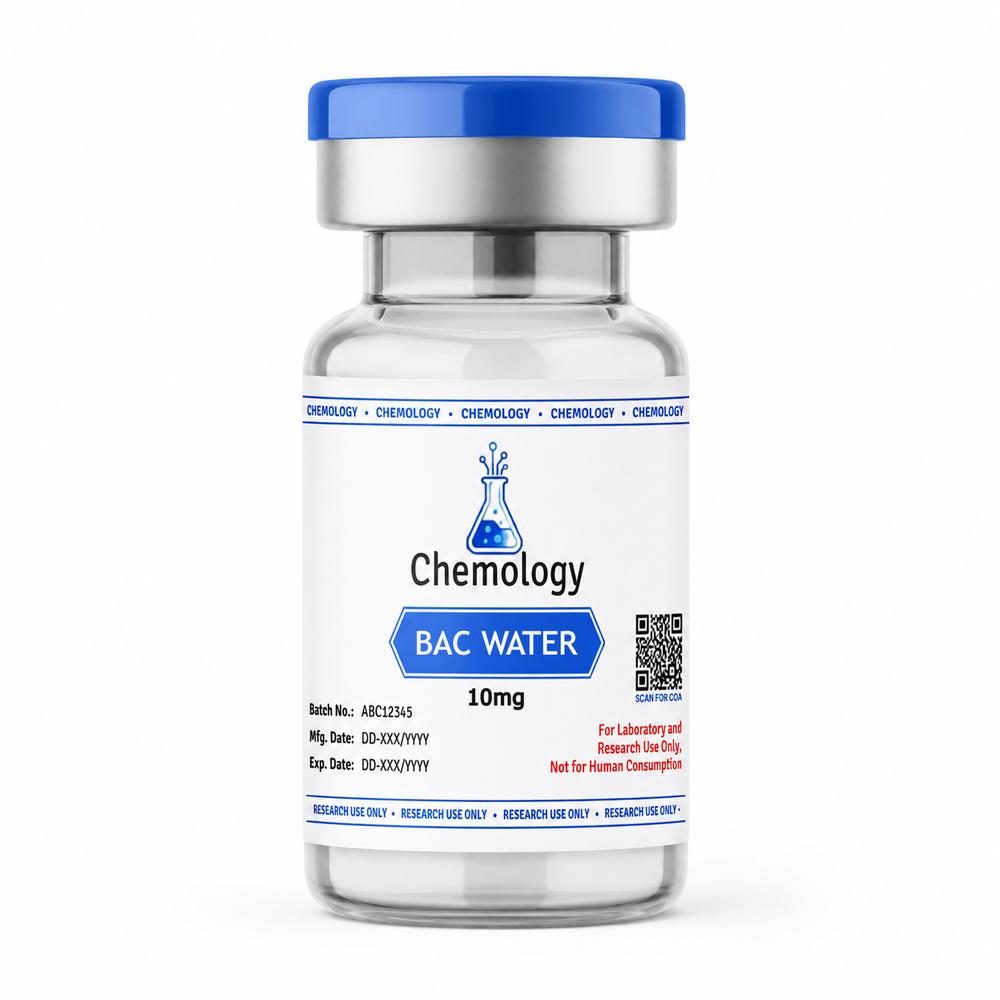
Bacteriostatic water and dilute acetic acid are supplied as solutions and are stored at controlled room temperature, protected from light, rather than frozen. Confirm solvent compatibility against your own protocol before use, as benzyl alcohol and low pH are each unsuitable for some preparations.
Disposal
Dispose of unused material, reconstituted solutions and used vials in accordance with your institution’s waste procedures and all applicable federal, state and local requirements. The purchaser is responsible for disposal.
Research use only
This guidance covers laboratory storage and handling of reference material. It is not preparation guidance for any human or veterinary application. All products supplied by Chemology are for in-vitro laboratory research use only, and are not for human or veterinary consumption, or for diagnostic, therapeutic, food, cosmetic or household use.
Looking for something else?
Tell us the compound and quantity you need and we will confirm stock and lead time. Research use only.
Contact Us